Biohacking Stress Resilience: Why you need to be adopting this approach
I believe biohacking will become the major health trend of the 21st century, at least in some form or other. Biohacking might sound strange and even creepy, but it's not about doing dangerous experiments on yourself. Biohacking is the art and science of optimising your well-being and performance by measuring, tracking and optimising your biology. In this article my aim is to unpack this simple definition and show how it makes a lot of sense for stress management.
Stress is a truly mind-body phenomenon. Stressors (i.e. the causes of stress) can be both physical and psychological, and they can come from within (the body or the mind) or without (the environment, or the social world) That is, stressors can be internal or external. The stress response is both a biological response (designed to help us cope better) and a psychological experience (comprising thoughts, beliefs, emotions).
Biohacking stress means shaping our biology to minimize the potential harm from stress, optimise the benefits of good stress, and develop our flexibility and adaptability in order to quickly and easily recover from stress.
Seven Principles of Biohacking
1 There's a broad spectrum of health functioning
Health is not just absence of disease but optimal functioning. There's a large middle ground between outright disease and optimal functioning, and if you're in the middle to lower range, you might be getting by but feeling tired, stressed, foggy-headed. You might be over-weight, or have other risk factors.
2 You need to address causes not suppress symptoms
Mainstream medicine focuses on drugs that suppress symptoms, but do not address underlying causes (though arguably they affect causal mechanisms). For example, if you have a headache you take a pain killer, if you feel anxious or depressed you take anti-depressants. But the headache had a cause, or set of causes, that may precipitate another headache tomorrow. Take away the anti-depressants, and you're likely to relapse into mood problems.
3 There are multiple causal factors behind non-optimal functioning
For example if you're feeling stressed and anxious, there are a number of physiological factors involved (putting aside for a moment the psychological factors) including: high levels of cortisol (a stress hormone), poor breathing, over-active fight-or-flight (sympathetic dominance), poor blood sugar regulation, deficiencies of nutrients such as magnesium and vitamin D, and lack of sleep or poor sleep quality. Moreover, these factors are inter-related; that is, we need to take a systems view of stress and mood regulation.
4 You need to take a systems-based approach
A systems approach means you look at how the components of the different systems are interacting, and you try to discern where the weak points are. These are the places where you can make the most difference. You probably want to make these your primary targets, but ultimately you'd try to address as many causal factors as you can.
5 You need to measure what's happening
To find the places where you can make the most difference, you need to objectively measure what's going on. For example in stress you can measure breathing regulation e.g. using a capnometer (something I do for all my clients), you can get an angle on autonomic balance (sympathetic / parasympathetic functioning) using HRV analysis (for which you only need to measure heart rate).
You can measure hormones and nutrient deficiencies using lab tests, and you can track your sleep and blood sugar using relatively low cost consumer devices.
6 You need an individualised approach
Not all possible causal factors apply to any one individual, e.g. you might be getting enough quality sleep or you might not. That's why you need to measure to find what matters to you. The points where you can make the most difference will to some extent be individual to you.
7 You need to track the effects of your interventions
You decide to target your individual weak points with specific interventions – for example you learn to breathe well using biofeedback training, or you limit your blue light exposure in the evening to improve sleep, or you adjust your diet to improve blood sugar control. All of these can help, but they won't necessarily be the difference that makes the difference. How would you know? Ideally you'd feel the difference subjectively – your symptoms would improve – but minor changes are hard to notice. Better to measure objectively and track changes.
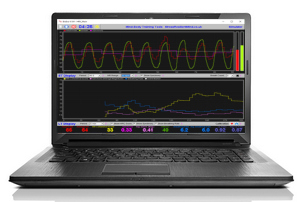
Mind-Body Training Tools
Biofeedback & Neurofeedback Software
A suite of applications covering a range of modalities, including HRV, capnometry, EMG and EEG
Biofeedback Professional Practitioner Training
- Add biofeedback to your practice for better client outcomes
- Attract new clients with cutting-edge tools
- *** PLEASE NOTE THIS PRODUCT IS STILL IN DEVELOPMENT AND NOT YET AVAILABLE ***