Biofeedback & Neurofeedback for Professionals
Professional psychologists, therapists, counsellors and coaches around the world are adding biofeedback and neurofeedback to their practices for broadly two reasons:
- To achieve better client outcomes
- To attract more clients and develop their businesses.
What Outcomes Can Biofeedback & Neurofeedback Help to Achieve?
- Better mood and emotional resilience
- Improved cognitive performance, especially focus, attention and concentration
- Stress resilience; improved performance under stress
- Better sleep quality
- More effective management of habits, addictions and cravings
- Enhanced executive function: self-organisation and decision-making, and reduced distractability and procrastination.
What Do Professionals Need, to Deliver Improved Outcomes?
Practitioners need powerful, functional software and hardware tools, preferably without breaking the bank, and they need training in how to get the best out of these tools.
A biofeedback practitioner is like a graphic designer: using professional software like Adobe Photoshop, graphic designers can deliver higher quality outcomes for their clients, who might have used consumer freeware for themselves, for two reasons. They have more capable tools, and they are expert in using them.
Mind-Body Training Tools Biofeedback & Neurofeedback Software
Mind-Body Training Tools is an extensive suite of applications which aim to train the skill-set of self-regulation. The apps are divided into modules:
- HRV Module: Heart Coherence, Blood Volume Amplitude
- EEG Assessment Module: record from sites simultaneously or in sequence (depending on your hardware) and combine data into reports drawing out key patterns
- EEG Training Module: a large set of preconfigured (but editable) protocols, plus feedback screens
- Peripheral Biofeedback: EMG (muscle tension), Skin Conductance (GSR), Skin Temperature
- Capnometry (End-Tidal CO2): applications combining ET CO2 with e.g. EMG or Heart Coherence
- Hemoencaphalography or HEG: a range of feedback options include "shadow" feedback where a e.g. steaming video can be brightened or darkened.
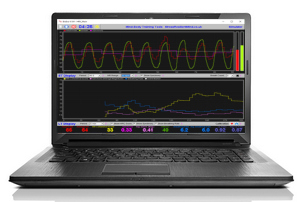
Mind-Body Training Tools
Biofeedback & Neurofeedback Software
A suite of applications covering a range of modalities, including HRV, capnometry, EMG and EEG
Becoming An Expert Practitioner
As in graphic design, in biofeedback and neurofeedback we have an unavoidable trade-off between on the one hand, functional power of the software and hardware tools, and on the other, ease of use, or investment of time and effort in becoming profieient in their use.
Mind-Body Training Tools delivers powerful functionality, and whilst it's designed to be as easy to use as possible, we don't pretend you can use MBTT like an expert from day one.
That's why we're developing practitioner training programmes.
Biofeedback or Neurofeedback: Which Is Better?
There's little doubt that neurofeedback (which is a form of biofeedback that directly trains brain neurophysiology) is the more popular method. You might assume it to be more powerful since you're directly training the brain rather than something "downstream" of the brain. Indeed you'd be right in some respects - e.g. neurofeedback has been used with developmental disorders such as ADHD.
On the other hand, biofeedback and neurofeedback work at different levels, and biofeedback has strengths that neurofeedback can't match. But the key point I want to make is that they are complementary - so why not use both!
Differences Between Neurofeedback and Biofeedback
I discuss the differences more fully in my free report on How Biofeedback and Neurofeedback Can Support Better Client Outcomes, which you can sign up for below. For now I want to focus on one key difference. Neurofeedback is a kind of brain fitness training - -it's like taking your brain to the gym. You need regular sessions to gradually build up strength and fitness.
Biofeedback, on the other hand, works more at the level of the mind. It trains and develops skills, which can be consciously accessed - e.g. by learning to fully relax muscles with EMG biofeedback, you gain a new stress reduction technique. Biofeedback can even facilitate learning by offering clients insights into how the mind works, and thus help them to shift mindset.
Why I Recommend Starting With Biofeedback
Summarizing, I think there are at least three reasons for professional practitioners to start with biofeedback:
- Because it works at this level of skills, biofeedback can integrate more closely with psychological tools and methods you already use as a professional.
- Biofeedback practitioner skills are more straight-forward for professionals to acquire (in my opinion).
- Whilst neurofeedback can complement biofeedback, there are reasons to believe that starting a client with some biofeedback, can facilitate the neurofeedback training process.
Stress Resilience Skills
Stress resilience is the ability to quickly and easily recover from upsets and knock-backs. All clients can benefit from developing the stress resilience, which is founded on self-regulation skills, or what I call mind-body skills.
A simple example of the mind-body basis of resilience is muscle tension and relaxation. By learning to fully and relax muscles using EMG biofeedback, a client can not only feel less stressed, but has the platform to effectively let go of unhelpful negative thought processes (i.e. biofeedback can facilitate cognitive defusion).
Optimal Breathing Training
How you breathe reflects how you think, feel, act, and pay attention - and vice versa.
Meditation & Mindfulness Training
Practitioners of many professional disciplines are using meditation and mindfulness as evidence-based methods. Meditation is the systematic training of attention - but do the benefits gained depend on how successfully you can focus and still the mind?
In the ancient traditions of the east, as meditation practitioners became more skilled they progressed towards some spiritual "goal" such as enlightenment or liberation. I believe this perspective of the development of skills is lacking from modern secular practice of mindfulness and meditation.
My own view is that biofeedback and neurofeedback can support effective practice of meditation and mindfulness, by helping clients create optimal physiological conditions for calm, clear focus and emotional positivity. In other words, they can support the development of self-regulation skills.
This is a view I explain and develop fore fully in my free guide on How Biofeedback and Neurofeedback Can Support Better Client Outcomes.
Mindset Training
What do clients need to overcome their problems and achieve their goals?
One key foundation is mindset: the set of attiduces and assumptions that condition how you go about things. Often, clients' emotional problems are the result of inappropriate mindset.
In ACT (Acceptance and Commitment Therapy) anxiety is reframed as not so much a problem in itself as a symptom of unhelpful and inapporpriate attempts to control or suppress difficult stressful feelings. A useful metaphor is the quicksand trap: struggling not only doesn't work but makes things worse.
The quicksand trap, or the mental dynamic of inappropriate effort that it represents, comes up in biofeedback too. Overly-wilful efforts to control the biofeedback trace generally make it go in the wrong direction. Actually one of the great strengths of biofeedback is its ability to reveal this dynamic all-too-clearly for clients. One of the practitioner's key goals is to work with it, and help the client find a way to let go and allow the body's intelligence succeed.
Biofeedback Professional Practitioner Training
- Add biofeedback to your practice for better client outcomes
- Attract new clients with cutting-edge tools
- *** PLEASE NOTE THIS PRODUCT IS STILL IN DEVELOPMENT AND NOT YET AVAILABLE ***